
Flexible demand
Use energy at the right time.
Coordinate when suitable equipment uses electricity, while respecting the needs of your site.
Discuss demand responseShift the timing.
Reduce the peak.
Illustrative load-shifting example
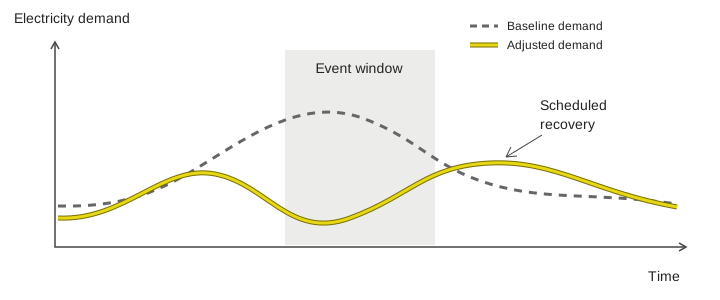
How demand response becomes a VPP resource.
Find the flexibility.
Identify equipment whose electricity use can move within the site’s operating needs.
Review equipment such as HVAC, EV charging and water heating against the work the site needs to do. The opportunity depends on when and how those loads can adjust.
Set the boundaries.
Agree comfort ranges, equipment limits, operating schedules and participant controls.
Define what can change, when it can change and which activities must be protected. These boundaries shape the demand-response plan before the site participates.
Connect the controls.
Use compatible devices and AIoT communications to send status and receive instructions.
Bring the relevant equipment and control systems into the operating network. Two-way communications link the site’s status with the instructions it can receive.
Coordinate through Parsecc DERMS.
Combine available flexibility with the needs of the wider energy network.
Parsecc, our Distributed Energy Resource Management System, brings connected resources into an operating view. A coordinated plan accounts for site requirements and the flexibility available across participating assets.
Respond to the event.
Adjust participating loads within the agreed operating plan when a dispatch signal arrives.
A response can change the timing or level of suitable equipment’s electricity use. The action follows the site’s agreed limits and the requirements of the participating program.
Verify and return to schedule.
Measure the response, then restore equipment through a planned recovery.
Review the response using the program’s measurement approach. Plan the return to normal operation so deferred demand is managed alongside the site’s next operating needs.
Participation, measurement and operating requirements depend on the site and program.
Connect your next step.
Explore Parsecc DERMS Pair flexibility with storage Understand VPP operationsWhich loads can participate?
Suitable loads may include HVAC, EV charging, water heating and some commercial or industrial processes. Participation depends on the equipment, controls, operating needs and program requirements. A site review identifies which adjustments are practical.
How are comfort and operations protected?
The plan defines temperature ranges, equipment limits, schedules and participant controls before an event. Critical activities and safety requirements remain part of the operating boundaries. The available flexibility reflects those requirements.
Does shifting demand always reduce total energy use?
No. Load shifting changes when electricity is used and may move some demand into a later recovery period. Total energy use depends on the equipment and operating conditions. Reducing peak demand and reducing total electricity consumption are different outcomes.